
Rear-End Accident Lawyer in Missoula, MT
Rear-end collisions are among the most frequently undervalued accident claims in Montana, and insurance companies know it. At Holloway & Hulling PLLC, our Missoula lawyers know it too, and we know how to fight back. With over 2,000 successful cases, 50+ years of combined experience, and a Missoula office at 255 West Front Street, we are here to make sure you are not left paying the price for someone else’s negligence.
Call today for a free consultation. No fee unless we win. Call (406) 880-7424.
Why Insurance Companies Undervalue Rear-End Accident Claims
You were stopped at a red light on Reserve Street, slowing down on I-90, or waiting to turn onto campus for a University of Montana event, and then it happened. Another driver wasn’t paying attention, hit you from behind, and now you’re dealing with a stiff neck, pounding headaches, or back pain that wasn’t there before. Maybe the other driver is apologizing and the damage to your car looks minor. Maybe the insurance adjuster has already called, telling you not to worry, that these things happen, that they’ll take care of it.
Don’t sign anything. Don’t settle. And don’t assume that because the crash seemed minor, your injuries are too.
The “Low-Speed” Argument
Adjusters routinely argue that because a collision happened at low speeds – under 15 mph – it could not have caused serious injury. This is misleading. Medical research consistently shows that significant soft tissue, spinal, and neurological injuries can and do occur in low-speed impacts. The human body, particularly the neck, is not designed to absorb the sudden whipping motion of a rear impact, regardless of how slow the vehicles were moving. Your injuries are real whether or not there is visible damage to the car.
The Pre-Existing Condition Defense
If you have any prior history of neck pain, back problems, or headaches, the insurance company will almost certainly try to attribute your current injuries to those pre-existing conditions rather than the accident. An experienced rear-end accident attorney knows how to work with your treating physicians and, if necessary, independent medical experts to establish the clear link between the crash and your current symptoms.
The Quick Settlement Offer
Insurers often reach out within days, sometimes hours, of an accident with a settlement offer. The offer may feel like a relief at the moment. But many rear-end injuries, including whiplash, herniated discs, and traumatic brain injuries, have delayed symptoms that may not fully manifest for days or weeks. Once you accept a settlement and sign a release, you cannot go back for more compensation, even if your condition worsens. Never accept an offer before you have a complete picture of your injuries and a lawyer reviewing your claim.
Dismissing Soft Tissue Injuries
Whiplash and other soft tissue injuries do not always appear on X-rays or standard imaging. Insurers exploit this by labeling them as “subjective” or “unverifiable.” In reality, these injuries can result in chronic pain, limited mobility, and long-term disability. Our attorneys know how to document and present soft tissue injuries in a way that demands fair compensation.

Establishing Liability in a Missoula Rear-End Accident
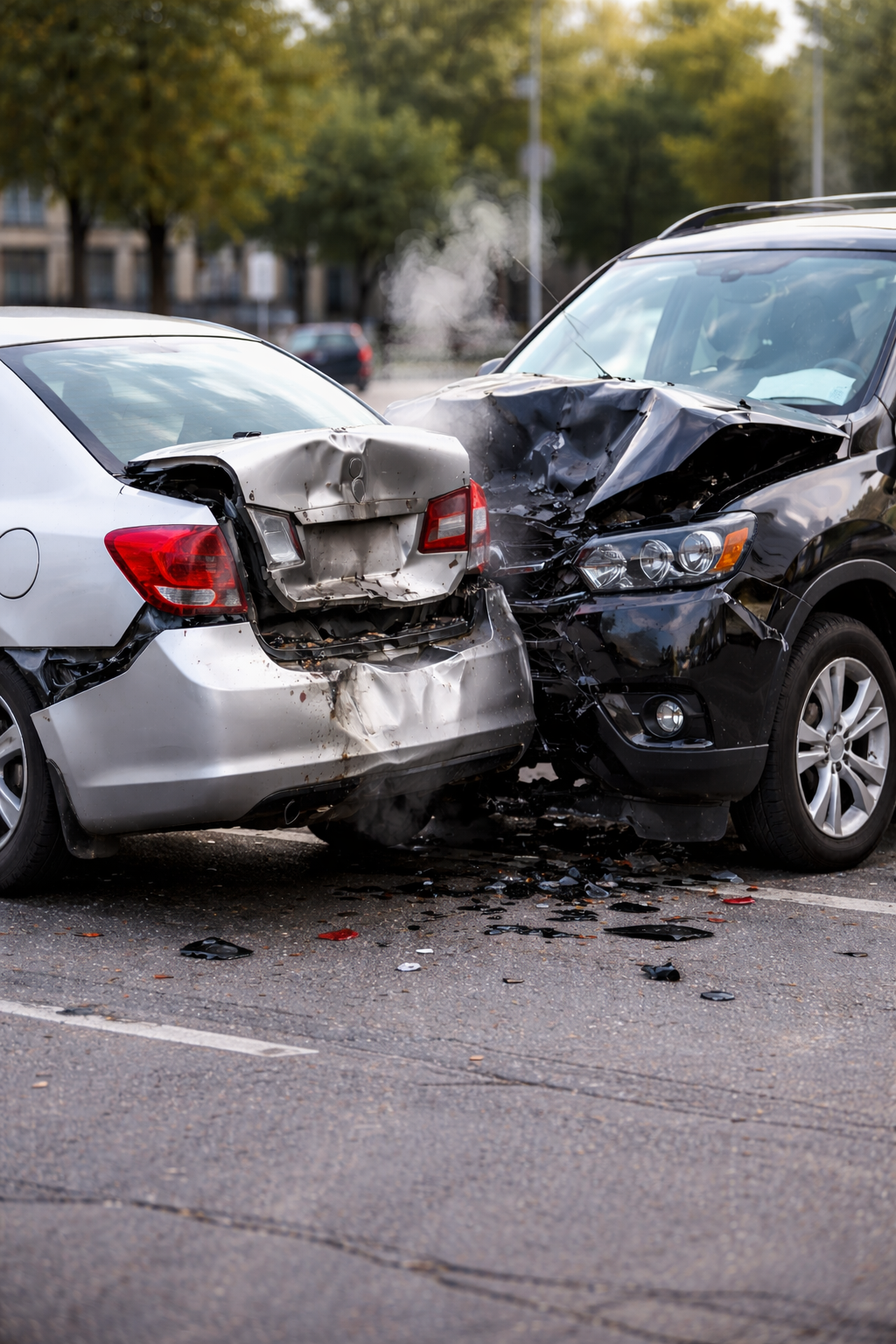
In most rear-end collisions, liability falls on the driver who struck the vehicle in front. Montana law requires all drivers to maintain a safe following distance and pay attention to road conditions ahead. A driver who rear-ends another vehicle has generally failed both of those duties.
However, establishing and defending liability in these cases is rarely as simple as it sounds. Insurance companies dispute fault in rear-end crashes in a number of ways, including arguing that:
- You stopped suddenly or without adequate warning
- Your brake lights were not functioning
- You cut off the other driver prior to the impact
- Road conditions contributed to the collision
- You were partially responsible for the crash
- There is no police report documenting fault
Under Montana’s modified comparative negligence rule (Montana Code 27-1-702), your compensation is reduced by your percentage of fault, and you cannot recover anything if you are found more than 50% at fault. Insurers know this and routinely attempt to assign partial fault to rear-end victims to reduce what they pay. Our attorneys investigate these claims aggressively, preserving dashcam footage, obtaining records, interviewing witnesses, and in some cases, reconstructing the crash, to ensure liability is established accurately and fault is not unfairly shifted onto you.
Injuries Commonly Caused by Rear-End Collisions in Missoula
The physics of a rear-end collision, the sudden, violent forward thrust of your body while your head lags momentarily behind, creates a unique injury profile that affects the neck, spine, and brain more than almost any other crash type.
Our attorneys represent clients suffering from:
Herniated and Bulging Discs
The force of a rear impact can compress or rupture the discs that cushion the vertebrae of the spine. A herniated disc in the cervical (neck) or lumbar (lower back) region can press on adjacent nerves, causing radiating pain, numbness, tingling, and weakness in the arms or legs. These injuries often require physical therapy, epidural injections, or in serious cases, surgery. Oftentimes they are not discovered until later, when complaints of pain are not resolving.
Whiplash and Cervical Strain
Whiplash is the hallmark injury of rear-end crashes. The rapid back-and-forth motion of the head strains the muscles, tendons, and ligaments of the neck, causing pain, stiffness, headaches, and reduced range of motion. Symptoms frequently do not appear until 24 to 72 hours after the crash, which is exactly why seeking immediate medical attention is so important. Whiplash can range from a mild strain to a severe injury involving nerve root damage or structural damage to the cervical spine.
Traumatic Brain Injury (TBI)
Even when there is no direct head impact, the violent movement of a rear collision can cause the brain to shift and collide with the inside of the skull, producing a concussion or more serious traumatic brain injury. TBI symptoms include headaches, dizziness, memory problems, difficulty concentrating, sensitivity to light and sound, and changes in mood or sleep. These symptoms are frequently dismissed by insurers but can be profoundly disruptive to daily life and work.
Facet Joint Injuries
The facet joints connect the vertebrae of the spine and are particularly vulnerable in rear-end collisions. Facet joint injuries can cause localized pain, stiffness, and referred pain to the head, shoulders, and upper back. They are often missed in initial emergency evaluations and may require diagnostic nerve blocks or imaging to identify properly.
Spinal Cord Injuries
In more severe rear-end crashes, particularly those involving large commercial vehicles, high speed, or vulnerable occupants, spinal cord damage can occur with consequences ranging from chronic pain to partial or complete paralysis. These cases require aggressive legal representation and comprehensive long-term damage calculations.
Shoulder, Chest, and Wrist Injuries
Seatbelt and airbag deployment in rear-end crashes can cause bruising, tearing, or fractures to the shoulder, chest wall, and wrists. These injuries are often overlooked initially when the focus is on neck and back pain, but they can significantly affect daily function and recovery time.
Psychological Injuries
Being struck from behind, often with no warning, can cause acute stress reactions, anxiety, post-traumatic stress disorder (PTSD), and a lasting fear of driving. These psychological effects are compensable under Montana law and deserve to be part of any fair damage calculation.
Where Rear-End Accidents Happen Most Often in Missoula
Missoula’s combination of growing traffic, heavy stop-and-go commercial corridors, and a large student population creates specific hotspots for rear-end collisions. Our attorneys are familiar with the roads and intersections where these crashes happen most:
- Reserve Street — one of Missoula’s busiest commercial corridors, with heavy traffic, frequent traffic signals, and constant turning conflicts that lead to rear-end and chain-reaction crashes
- Brooks Street and South Avenue — high-volume roadways with dense intersections and erratic traffic flow
- Interstate 90 through Missoula — high-speed rear-end crashes occur regularly, especially at on-ramps, merge points, and during adverse weather
- Highway 93 — traffic entering and exiting Missoula from the south, with variable speed zones and significant commercial vehicle, semi truck and truck traffic
- Russell Street and North Reserve — commercial and residential transition zones where speed and attention frequently mismatch
- University District streets — high pedestrian and cyclist traffic combined with student drivers unfamiliar with the area creates elevated rear-end risk
- Downtown Missoula intersections — particularly on Higgins Avenue and Broadway, where stop-and-go patterns and parallel parking create frequent low-speed rear-end incidents
No matter where in Missoula your crash occurred, if another driver’s inattention, tailgating, distracted driving, or speeding caused the collision, Holloway & Hulling will build the case to hold them, and their insurer, fully accountable.


What Compensation Can You Recover After a Missoula Rear-End Accident?
The full cost of a rear-end accident extends far beyond the initial emergency room visit. Our attorneys account for every category of damages when calculating what your claim is truly worth:
Economic Damages
- All past and current medical expenses — emergency care, imaging, specialist visits, physical therapy, chiropractic care, prescriptions, and medical devices
- Future medical costs — ongoing treatment, potential surgery, and long-term rehabilitation for chronic injuries
- Lost wages — all income lost while you were unable to work during recovery
- Loss of future earning capacity — if your injuries affect your ability to return to your previous occupation or work at full capacity
- Vehicle repair or replacement, rental car costs, and related out-of-pocket expenses
Non-Economic Damages
- Pain and suffering — both the physical pain and the emotional toll of living with chronic injury
- Emotional distress — including anxiety, depression, and PTSD arising from the accident
- Loss of enjoyment of life — activities, hobbies, and experiences you can no longer fully participate in
- Loss of consortium — the impact on your relationship with your spouse or family
What to Do After a Rear-End Accident in Missoula
The steps you take in the hours and days after a rear-end crash can significantly affect your recovery and your claim. Here is what our attorneys advise:
- Call 911 — Montana law requires you to report any accident involving injury or damage over $1,000. Even if you feel uninjured, get the crash on record
- Accept medical evaluation at the scene and follow up with your doctor as soon as possible — whiplash and TBI symptoms are frequently delayed, and a timely medical record is essential to your claim
- Document everything — photograph the position of the vehicles, damage to both cars, road conditions, traffic signals, your injuries, and anything else relevant at the scene
- Get the other driver’s information — name, driver’s license, insurance carrier, policy number, and vehicle registration
- Collect witness names and contact information
- Do not apologize or admit any fault at the scene
- Do not give a recorded statement to any insurance company, including your own, before consulting an attorney
- Do not accept any settlement offer or sign a release without legal review, no matter how reasonable it sounds initially
- Contact Holloway & Hulling at (406) 880-7424 for a free consultation as soon as possible

Why Holloway & Hulling for Your Missoula Rear-End Accident Case
We are based at 255 West Front Street in downtown Missoula. We know the roads where these crashes happen, the courts where these cases are litigated, and the insurance companies and defense attorneys who will be on the other side. That local familiarity is not a minor detail, it shapes how we investigate, how we negotiate, and how we try cases.
Insurance companies that handle rear-end claims in Missoula know Holloway & Hulling. They know we were named Best Attorney 2025 in the Missoulian. They know we have 2,000+ resolved cases behind us. And they know we go to trial when the offer isn’t fair. That reputation is one of the most valuable things we bring to your case before we ever send a demand letter.
Call (406) 880-7424. The consultation is free, you pay nothing unless we win, and the sooner you call, the stronger your case will be.
Contact Holloway & Hulling Free Rear-End Accident Consultation in Missoula
If you were rear-ended in Missoula — on Reserve Street, I-90, Brooks Street, or anywhere in Missoula County — and you are now dealing with pain, medical bills, or insurance pressure, do not navigate it alone.
Contact Holloway & Hulling PLLC today for a free, no-obligation consultation with an experienced Missoula rear-end accident lawyer.